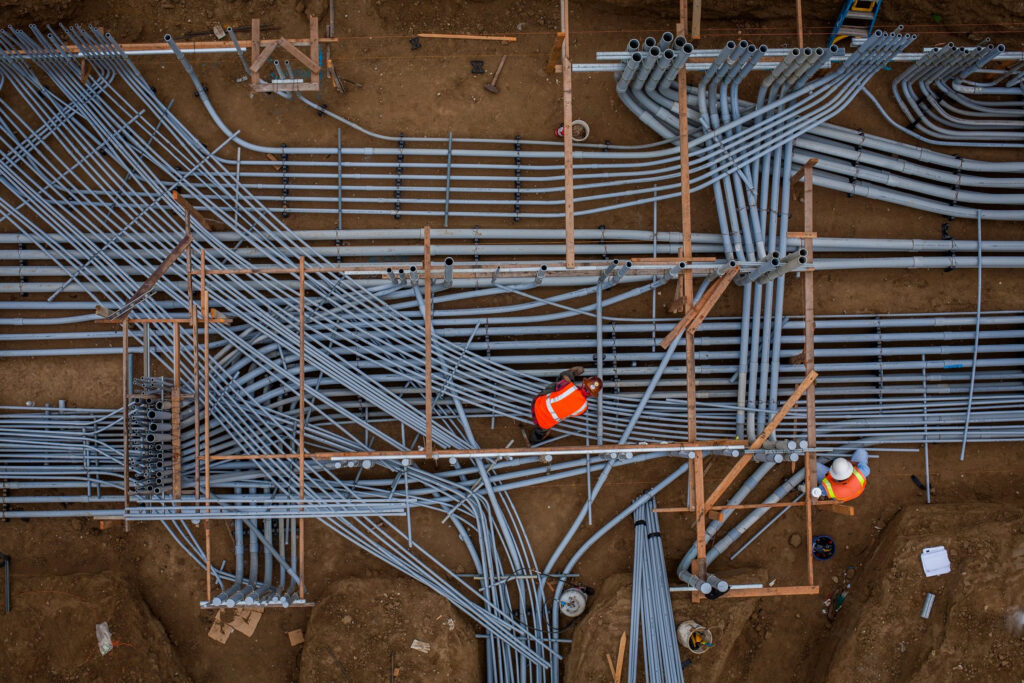

An electric utility wanted to explore how extended reality (XR) could strengthen training for the design and planning of underground electric infrastructure. Electric Distribution Designers, Planners, and Project Managers must evaluate a range of substructure construction combinations while applying detailed construction standards and technical requirements. The utility needed a structured approach for translating this complex work into an interactive learning experience that could eventually be delivered through virtual reality headsets or accessed on a computer or tablet.
Design an interactive, standards-based XR training experience in Mosaic’s EndeaVR platform that helps electric distribution personnel practice evaluating underground substructure construction combinations.
Underground electric design requires employees to understand how construction standards, project conditions, and infrastructure components come together across a variety of configurations. Creating an effective XR experience required more than reproducing technical documents in a digital format. The project team first needed to determine which topics and materials should be included, what participants would do within the simulation, and how the experience could accurately reflect established electric underground construction standards.
The utility also needed a development-ready plan before moving into a full simulation build. This required defining the proposed environment, 3D modeling needs, user interface, navigation, technology requirements, data collection methods, and possible levels of build complexity. The learning experience had to be technically credible for its intended users while providing a practical foundation for estimating, developing, and rolling out future XR training through EndeaVR.
Mosaic partnered with the utility’s stakeholders and subject matter experts to analyze the work and design the foundation for an XR learning experience centered on electric underground substructure construction combinations. The engagement began with a review of relevant content, procedures, and construction standards. Mosaic then documented the intended learner experience, training objectives, technical requirements, simulation activities, and design parameters.
The solution included:
Through iterative alpha and beta reviews, utility stakeholders and subject matter experts evaluated the proposed experience, provided feedback, and helped refine the final storyboard and development plan. This collaborative approach translated technical standards and operational knowledge into a clearly defined EndeaVR training concept ready to guide future development.
The completed design framework provides a foundation for developing scalable, standards-based XR training in EndeaVR that can support more consistent decision-making across future underground electric infrastructure projects.